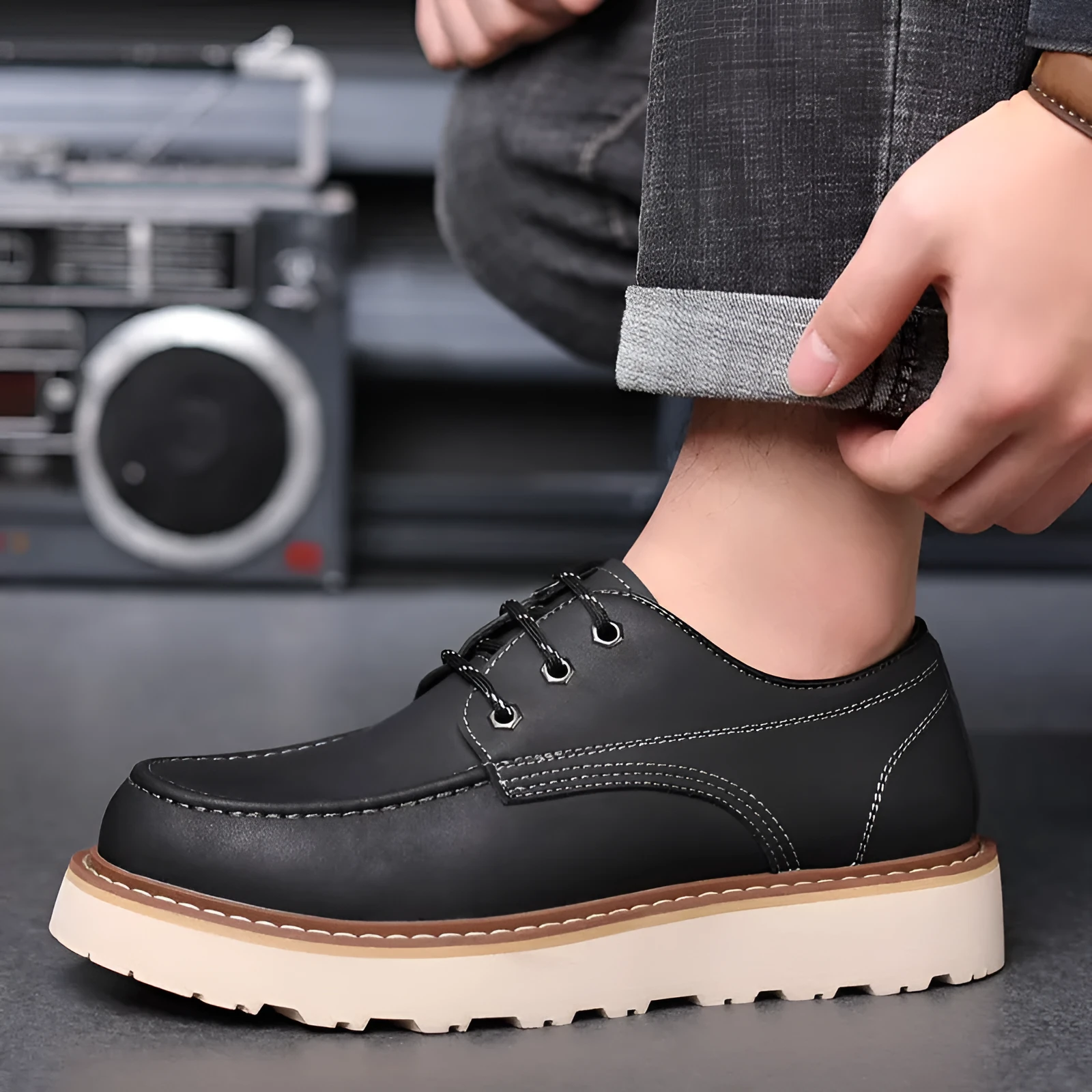
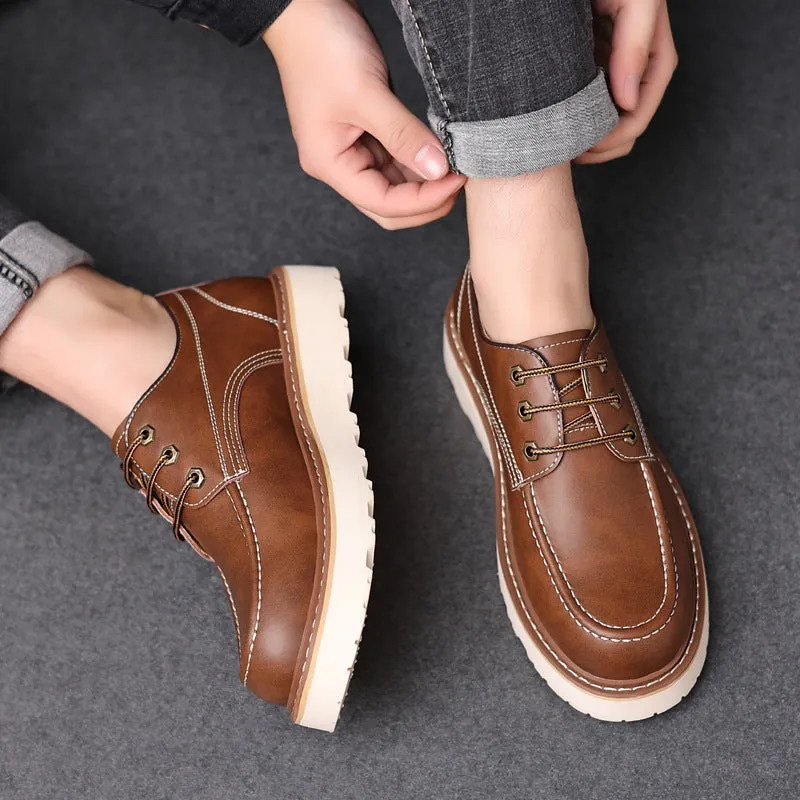
Martin Boots Men's low top retro casual shoes in British worker boot style with a mid heel for height increase, featuring a round toe, non-slip rubber sole and available in black or brown in sizes 38 to 44


Martin Boots Men's low top retro casual shoes in British worker boot style with a mid heel for height increase, featuring a round toe, non-slip rubber sole and available in black or brown in sizes 38 to 44
Men's Retro Martin Boots: British Worker Boot Style with Mid Heel for Casual Wear

These men's Martin boots draw inspiration from classic British worker boot designs, reimagined with a low-top, retro casual silhouette. The footwear features a mid heel height of 3-5 centimetres, providing a subtle elevation that can complement various casual outfits. With a round toe shape and available in both black and brown colourways, these boots offer a versatile aesthetic suitable for everyday use. The construction incorporates a non-slip rubber sole, adding a practical element of traction to the vintage-inspired design. Offered in sizes ranging from 38 to 44, these boots present a straightforward option for those seeking a touch of heritage style in their footwear rotation.
Features and Construction

The boots combine specific material choices and design elements to create their overall look and feel. The construction follows a traditional approach with distinct components for the upper, lining, and sole.
Material and Build
The shoe upper is made from a microfiber patch material, which forms the external structure of the boot. Inside, the boots feature a PU (polyurethane) lining, which creates the interior surface that comes into contact with the foot. The sole is crafted from rubber using a viscose shoe construction method, and it is designed with a non-slip property. The overall build is described as having an ordinary thickness, indicating a standard, non-bulky profile for the materials used.
Size and Practical Fit
These Martin boots are available in a wide range of sizes from 38 to 44, covering many common foot sizes. The round toe holder shape provides a specific toe box design that can influence fit and comfort. The low-top height and mid heel (3-5 cm) create a particular boot silhouette that sits lower on the ankle compared to traditional high-top worker boots, which may affect how they pair with different trousers.
Uses and Placement

With their specified design traits, these boots are suited for particular settings and styles of dress. Their aesthetic and functional features guide their appropriate use.
Event or Professional Use
The retro British worker boot style lends itself to casual or smart-casual environments where a vintage-inspired look is desirable. The non-slip rubber sole offers a practical safety feature for surfaces where extra traction is beneficial. The mid heel provides a slight height increase that can be suitable for various everyday situations outside of formal footwear requirements.
Everyday Home Use
For general daily wear, the boots' casual design and round toe shape offer comfort and a classic appearance. The available black and brown colour options provide flexibility to match with different casual wardrobes. The low-top construction makes them easy to put on and take off, contributing to their practicality for regular use.
Benefits and Buying Value

The value of these boots lies in the combination of their stated design features and material composition. They present specific advantages based on their construction and available options.
Reuse and Low Maintenance
The materials used, including the microfiber upper and rubber sole, are typically chosen for their balance of appearance and ease of care. Microfiber can often be cleaned with simple wiping, supporting ongoing use. The robust nature of a rubber sole contributes to the shoe's potential for extended wear before requiring replacement.
Why Choose This Product
This product offers a clear retro boot aesthetic with defined specifications: a British worker boot style, a 3-5 cm mid heel, a round toe, and a non-slip sole. The availability in two neutral colours and seven whole sizes provides selection flexibility. For buyers seeking a casual boot with these particular design elements and a vintage inspiration, this product presents a matching option.